

Single Tooth Implants, Brooklyn NYC
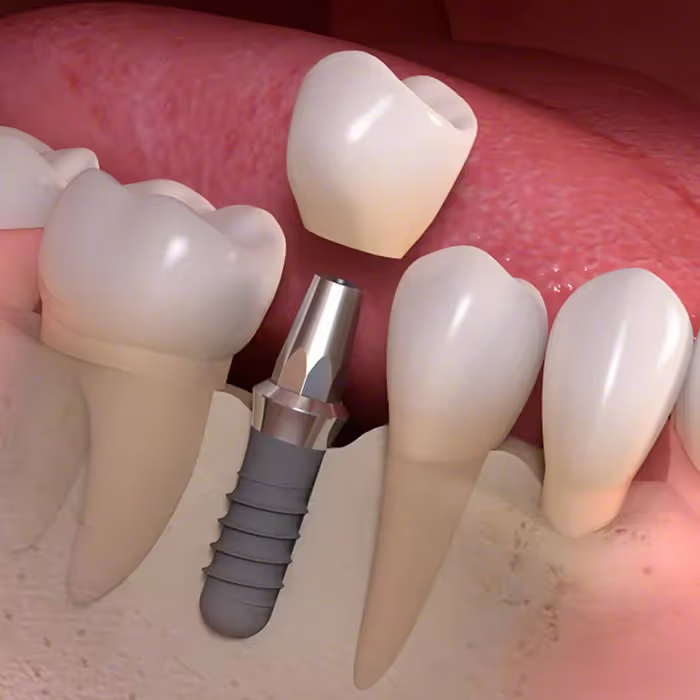
Traditional Dental Implant – Ideal Choice for Replacing a Missing Tooth
Dr. Cohen is an expert in placing single dental implants. He is among a few implant dentists in New York offering the newest and most advanced dental implant techniques and procedures. Dr. Cohen uses the latest techniques in implant dentistry, which enhances dental implant precision to unprecedented levels. New technology is used for polishing and finishing teeth margins and contouring teeth and dental implants. Dr. Cohen and his skilled team are located in Brooklyn, New York.
Single Tooth Implants
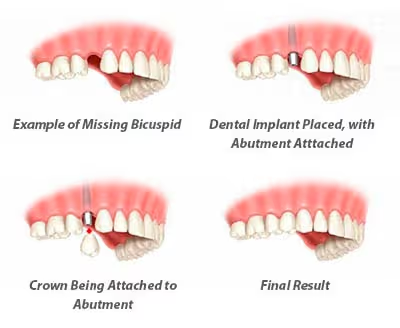
Treatment is very straightforward, and the appointment to place the dental implant is typically relatively short. Even though only a single tooth is being replaced, Dr. Cohen will need to carry out the same diagnostic tests to ensure that treatment is successful. These tests allow Dr. Cohen to plan and place your dental implant using advanced computer-guided surgery. This technique helps ensure that your treatment is more successful, easier, and faster, and that the implant looks and feels like a natural tooth, providing excellent functionality and appearance.
Who Can Have a Single Tooth Implant?
Tooth replacement is suitable for patients who have lost a single tooth due to disease or trauma, or for people who have congenitally missing teeth. Implant treatment is for people whose teeth and jaws have finished developing.
The main requirement is to have good dental and general health. There is no evidence to suggest the success of dental implant treatment is affected by age or gender.
Dr. Cohen will evaluate your dental and medical history and examine your mouth during your initial consultation to ensure that a single tooth implant is the best treatment option for you.
What Is the Procedure for a Tooth Replacement?
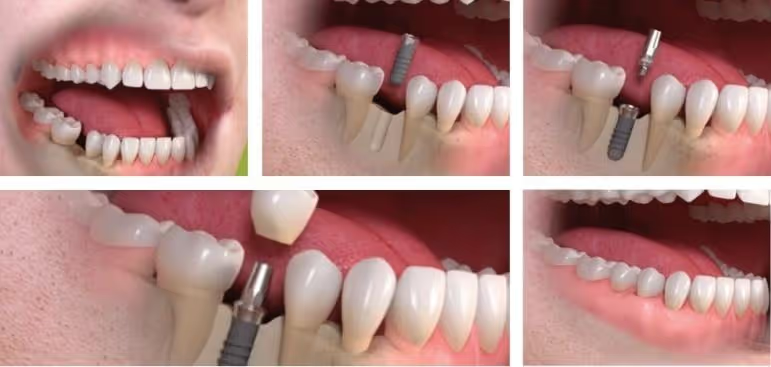
A single tooth implant process entails:
- Planning – Before treatment, Dr. Cohen will take a CT scan and dental x-rays to determine the best location for your dental implant. Where single implants are being used side-by-side, it is crucial to ensure adequate room between them so the implant crowns can be fabricated correctly. If the single tooth being replaced is particularly small — for example, a lower front incisor — Dr. Cohen may need to use a smaller diameter implant.
- Treatment – The actual surgery can be carried out under local anaesthetic and requires a small incision to be made in your gums, exposing the underlying bone. The implant is then carefully inserted into its pre-planned location.
- Healing cap – Dr. Cohen will place a healing cap over the dental implant before stitching up the gum. The healing cap protects the implant, allowing it to heal and integrate with the surrounding bone, and helps shape the gum tissue. Properly managing the gum tissue provides the best aesthetic results, so that when your implant crown is placed, it will be surrounded by natural-looking gum tissue that is easy to keep clean.
Recovery
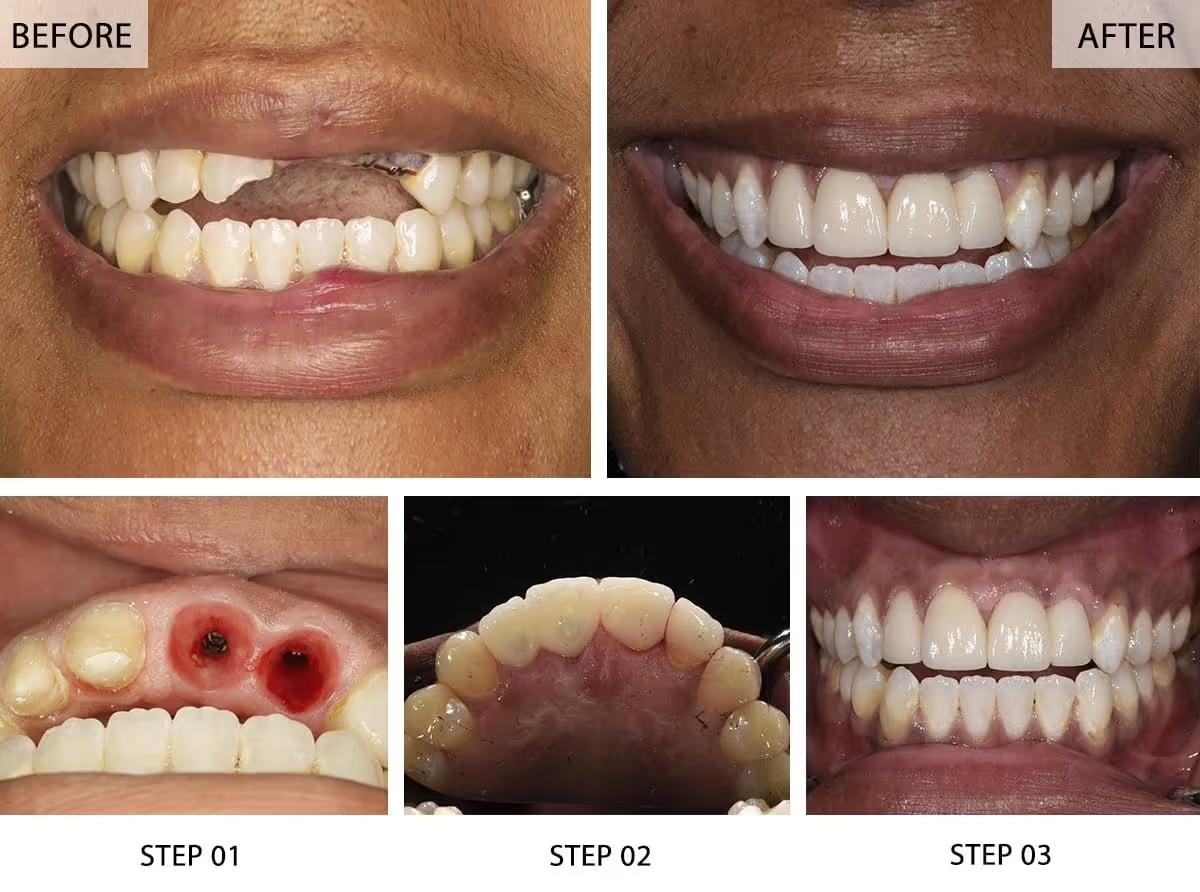
A single dental implant can typically be placed in an appointment of just one hour, and recovery time is quick. Most people feel well enough to return to work or normal activities the very next day, and it is not uncommon to experience no discomfort at all after this procedure. Any discomfort should be easily managed with over-the-counter painkillers.
Advantages of Single Tooth Implants
Aesthetically, a replacement tooth can look remarkable and is the only option where the new tooth appears to emerge from the gums, just like a natural tooth. A single dental implant is an excellent option if the teeth adjacent to the gap are in good condition and are healthy and strong.
With an alternative treatment such as a dental bridge, adjacent teeth need to be cut down and crowned to support the bridge. Additionally, a dental bridge will not protect the bone surrounding the missing tooth. As the jawbone resorbs, an unsightly gap may develop underneath the replacement tooth.
In the longer term, this treatment can be more cost-effective than choosing a bridge, and the implant can restore a patient’s self-confidence, making it easy to forget about tooth loss. Single dental implants are also straightforward to care for, as they can be brushed and flossed just like a natural tooth.
Disadvantages of a Single Tooth Implant
There are very few negatives to this treatment. The main disadvantage compared to alternatives is the length of treatment. Traditionally a single dental implant will take at least three months to complete, whereas a dental bridge takes just two or three weeks.
Sometimes patients may wish to consider a dental bridge if the teeth adjacent to the gap are significantly decayed or broken and already require crowns. In this case, a bridge could be a more cost-effective option.
Success Rate of the Treatment
Single dental implants in NYC tend to be enormously successful. The average success rate of surgery is 95%, but experienced and highly trained implant dentists like Dr. Cohen often achieve even higher success rates. Many people enjoy their implants for years, or even for life. One of the reasons they are so successful is that single dental implants are very easy to keep clean — they can be brushed and flossed the same as a natural tooth, reducing the risk of infection.
Risk Factors for Single Tooth Implants
Properly planned single dental implant surgery is extremely safe, but risk factors include:
- Implant failure due to poor oral hygiene
- Failure due to untreated bruxism (teeth grinding)
- Significant changes to general health that affect the immune system, such as uncontrolled diabetes
Alternatives to Single Tooth Implants
Alternative treatments to replace a single missing tooth include:
- Dental bridge – Requires the teeth adjacent to the gap to be significantly cut down and crowned to support the bridge.
- Partial denture – Supported by clasps around existing natural teeth, which can place those teeth under stress and increase the risk of fractures.
Neither option will halt bone loss, although both are quicker and less expensive to complete.
If you are seeking a qualified specialist for your single-tooth implant, Dr. Cohen’s office is the ideal choice. Contact our office today to schedule a consultation.
Frequently Asked Questions About Single Dental Implants
What’s the difference between single dental implants and full mouth implants?
Single implants replace one missing tooth using a titanium post and crown. Full mouth implants restore an entire arch or both arches of missing teeth, often using 4–6 strategically placed implants to anchor a full set of teeth.
Can I get my dental implants and restorations in the same office?
Yes. Dr. Cohen provides complete implant care in one location, including surgical placement and final restoration. There's no need to be referred to multiple specialists.
Are dental implants better than dentures?
Yes, in many cases. Implants are permanently fixed, provide better bite strength, and prevent bone loss. They also eliminate the movement and discomfort associated with traditional dentures.
How long does it take to get full mouth implants?
Treatment time varies depending on healing and whether extractions or bone grafting are needed. In many cases, patients receive temporary teeth the same day, with permanent restorations placed after healing.
Do dental implants hurt?
Most patients report minimal discomfort. Dr. Cohen uses advanced techniques and technology to ensure your implant surgery is as gentle and efficient as possible. Sedation options are also available.
Lorem ipsum dolor sit amet, consectetur adipiscing elit, sed do eiusmod tempor incididunt ut labore et dolore magna aliqua. Ut enim ad minim veniam, quis nostrud exercitation ullamco laboris nisi ut aliquip ex ea commodo consequat. Duis aute irure dolor in reprehenderit in voluptate velit esse cillum dolore eu fugiat nulla pariatur.
Restore Your Smile With Dental Implants in Brooklyn
Whether you’re missing one tooth or need full mouth restoration, Dr. Cohen provides advanced implant care in one location — from placement to final restoration. No referrals, no hassle.
